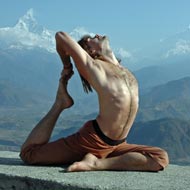
Hatha Yoga - 8 Limbs Of Yoga
Hatha Yoga is actually what most people simply call "yoga". This is a system of Yoga pioneered in India by a 15th century yogic sage, Yogi Swatmarama.
Hatha Yoga is a system of yoga most popular in the world - particularly in the West - and from which many other Yoga styles originated including Power Yoga, Bikram Yoga, Ashtanga Yoga, and Kundalini Yoga.
Literally speaking, the word "Hatha" is derived from the Sanskrit.
p

.terms "ha" meaning "sun" and "tha" meaning "moon"t For this reason, Hatha Yoga is referred to as that branch of Yoga which unites the pairs of oppositese This refers to the positive (sun) and negative (moon) currents in our systeme Hatha Yoga is concerned with the third and fourth steps - Asana and Pranayama - in the 8 limbs of Yogag
The goal of Hatha Yoga is to attain that balance between body and mind, while making attempts to free the more subtle spiritual elements of the practitioner's mind through physical poses (Asanas), Breathing Techniques (Pranayama), and Meditation (Dhyana)a
Hatha Yoga practice helps recognize one's own hidden potentials - physical and mentala By the continued performance of asanas, the practitioner gains flexibility and strength, and becomes more and more relaxed under stressful conditionsn
Hatha Yoga's relaxation exercises help unlock the energy channels that, in turn facilitates the free flow of spiritual energyg Certain asanas even massage and tone up the internal organs, thereby helping to prevent diseases like diabetes, arthritis, and BPB They also help harmonize and synchronize all internal and glandular functionsn On the other hand, the practice of Pranayama helps manage conditions such as asthma and bronchitisi
Above all Hatha Yoga also helps the practitioner cope with stress, relieve tension, and deal with depression and anxietyt It also helps focus the mind in preparation for meditation and, ultimately, in the quest for Liberationo
pWhat Is The Anatomy Of Hatha Yoga?
Hatha Yoga Pradipika is a manual on Hatha Yoga, which has been written by Swami Svatmarama, in classic Sanskrit. The hatha yoga pradipika was originally written in the 15th century. In the present times, modern English translations of this text are available.
The ancient science of yoga has been steadily gaining a lot of popularity all over the world, especially in the United States, because of all the health benefits that have been associated with it. Besides learning the poses many people a;so read up a lot on the benefits of yoga as also the various styles. There are several benefits on the anatomy of yoga, illustrating the poses that help different ailments and precise ways in which they should be performed. In order to avoid any problems or injuries, it is important to consult a well-qualified and experienced yoga teacher.
What Is Sequences Of (Asanas) Poses In Hatha Yoga?
The practice of various hatha yoga poses and postures is gaining a lot of popularity in the last few years, all across the United States. People of all ages have started practicing hatha yoga postures to improve their health and overall wellbeing. The practice of Hatha yoga follows certain sequences. A hatha yoga sequence can also ends with The Sun Salutation. The 12 poses that are included in this sequence are also hatha yoga poses and are as follows:
1. Tadasana (The Mountain Pose)
2. Urdhava Hastasana (The Upward Hand Pose)
3. Uttanasana (The Forward Bend)
4. Low Lunge
5. Adho Mukha Savasana (The Downward Facing Dog Pose)
6. Kumbakhasana (The Plank Pose)
7. Chaturanga Dandasana (The Four Limbed Staff Pose)
8. Urdha Mukha Savasana (The Upward Facing Dog Pose)
9. Adho Mukha Savasana (The Downward Facing Dog Pose)
10. Low Lunge
11. Uttanasana (The Forward Bend)
12. Tadasana (The Mountain Pose
Where Hatha Yoga Roots? Who Invented It?
Though the practice of practice of Hatha Yoga has gained a lot of popularity in the last few decades, there are many people interested in knowing more about hatha yoga facts before they take up this practice.
It is believed that the roots of Hatha Yoga date back to more than 5,000 years ago. Like almost all other forms of yoga, hatha yoga origin also likes in India. The word Hatha has been derived from “Ha”, which also means the Sun and “Tha”, which stands for the Moon.
There are several ancient scriptures on hatha yoga culture, some of which have been written by Goraksha Natha. The hatha Yoga Pradipika, which is the oldest known manual on this discipline of yoga, is also available in its modern English translation.
What Mean By Hatha Yoga?
The word Hatha needs to be split into two halves, “Ha” and “Tha”, in order to understand its literal meaning or translation. “Ha” stands for The Sun and “Tha” means The Moon. Therefore, the most common hatha yoga translation is “the ancient practice that brings union of the pairs of opposites”. It is also referred to as “forceful yoga”, as a lot of physical effort is required to practice this form.
Hatha yoga history can be traced back to more than 5,000 years ago. Like most of the other forms of yoga, hatha yoga origin lies in India. It is believed that Goraksha Natha, a disciple of Matsyendra, was the founder of this form of yoga. There are also many ancient texts on Hatha Yoga, some of which have been written by Goraksha.